.png)

By using our website, you agree to the use of cookies as described in our Cookie Policy
a
Rss Feed
Expert Advice from Pacific Palisades Interior Designers on Blending Functionality with Custom Florida Builds
A striking home on a coastal bluff can look effortless, but the work behind it is anything but. A Pacific Palisades interior designer must balance open views, daily routines, and the practical needs of a custom build—even when that build takes place across the country in Florida. Many homeowners today want this same balance of calm luxury and real-world usability, so the lessons drawn from one coastal community can offer smart direction for another.
This article breaks down how design principles shaped in Pacific Palisades translate to custom Florida homes. You will learn how to plan functional layouts, anticipate climate-driven challenges, and apply coastal-inspired simplicity that still feels personal. If you are building or renovating in Florida—and want that refined but livable coastal feel—this guide lays out the steps, strategies, and design ideas to support your vision.
Understanding the Pacific Palisades Design DNA
Homes in Pacific Palisades often reflect an easy, coastal mood grounded in natural light and simple forms. Designers working in this neighborhood tend to prioritize an indoor-outdoor flow, using open layouts that let breezes and daylight move through the space. Large windows, sliding doors, and terraces become part of daily life, not just architectural features.
You’ll also notice neutral palettes, natural stone, warm woods, and soft textures that create a sense of calm. These elements help keep visual noise low so views and gathering areas can take center stage. A Pacific Palisades interior designer here focuses on livability as much as beauty, asking how a space supports the homeowner’s routine and comfort. That mindset is especially helpful for anyone planning a custom home in a climate with moisture, sun, and outdoor living at the forefront.
When drawing inspiration from Pacific Palisades for a Florida build, the core idea is connection—to people, to nature, and to simple, functional layouts. Florida’s climate demands adjustments, but the underlying design DNA translates well when adapted with climate-ready materials and thoughtful planning.
Key Challenges of Custom Home Builds in Florida and How Design Addresses Them
Florida custom homes come with a unique mix of needs. High humidity means finishes must resist moisture and mold. Strong storms require planning for wind loads, window strength, and outdoor structures. Because many Florida homes emphasize pool areas and lanais, designers must create seamless movement between indoor and outdoor rooms.
Large open spans for entertaining are common, but those areas need storage, lighting control, and circulation paths that keep the space from feeling empty. A Pacific Palisades mindset—focused on flow, clarity, and daily use—helps shape these wide areas with intention.
Smart design choices include moisture-friendly flooring, breathable fabrics, built-ins for organization, and zoning for guest and family living areas. When these pieces are decided early, the home feels unified from the start.
Functionality First – Interior Design Strategies That Work
Practical planning drives long-term comfort, especially in a large custom home. Start by mapping daily routines. Identify where people enter, cook, eat, relax, and get ready each day. These patterns guide everything from cabinetry placement to outlet locations.
Zoning is another helpful strategy. You can group formal spaces at the front of the home and casual zones near the pool. A hidden pantry or tucked-away laundry space keeps traffic smooth and reduces visual clutter. Guest suites benefit from flexible layouts, giving visitors privacy without isolating them from the rest of the household.
Storage plays a big part in functionality. Custom cabinetry, walk-in closets, and integrated media walls keep large homes feeling grounded and easy to maintain. Removing clutter makes the design feel more open and purposeful.
Indoor-outdoor transitions matter even more in Florida. Sliding glass doors, shaded patios, and flooring that continues outdoors can make a home feel larger. Outdoor furnishings must handle humidity and sun, while lighting systems should support everything from meal prep to quiet evenings outside.
Layered lighting—ambient, task, and accent—supports both function and mood. Using dimmers and smart controls helps create flexibility, whether hosting a gathering or settling in for the night.
Adapting a Pacific Palisades Aesthetic for Florida Builds
A calm, coastal style works beautifully in Florida, but it needs small adjustments to handle the climate. A neutral palette sets the base, allowing for light color accents that reflect the tropical setting. Natural materials stay important, but selecting versions that resist humidity is key. Porcelain tile, teak, and outdoor-rated fabrics hold up well without losing the organic feel.
Landscape integration shifts from hillside views to sun orientation and breezes. In Florida, shade becomes as important as light. Thoughtful placement of windows, outdoor seating, and greenery helps create comfortable micro-climates around the home.
Both regions favor high ceilings and open volumes, but Florida homes may rely more on cross-ventilation and shade control. Coordinating early with your architect and builder ensures these environmental factors sync with your interior vision.
Some homeowners blend warm minimalism from Pacific Palisades with laid-back Florida notes. The result is a clean, natural look with a touch more color and climate-ready comfort.
Key Phases of a Custom Build & Interior Design Collaboration
A smooth custom build depends on clear collaboration. The earlier an interior designer joins the process, the better the outcome.
Phase 1: Pre-construction / Programming
This stage defines how you live—daily routines, adjacencies, lighting needs, and must-have spaces. This is also when major materials, like flooring and cabinetry, start to take shape.
Phase 2: Design Development
Here, floor plans evolve, finishes are selected, and furniture concepts are explored. This phase sets the visual and functional tone.
Phase 3: Documentation & Construction Coordination
Drawings are completed and shared with the builder and subcontractors. Clear communication ensures the home is built to match the design intent, from lighting placement to built-in detailing.
Phase 4: Procurement, Installation & Styling
Furniture, art, and accessories are ordered and installed. This final stage completes the home and supports everyday living.
Florida builds often require additional planning for HVAC systems, outdoor living, and materials that must ship from other regions. Designers experienced in complex custom homes help keep these tasks coordinated and on schedule.
For more insight into design approaches that blend interior planning with coastal environments, you can explore perspectives offered by informational sites such as the overview of Pacific Palisades on Wikipedia: https://en.wikipedia.org/wiki/Pacific_Palisades%2C_Los_Angeles
FAQ
What does a Pacific Palisades interior designer specialise in?
They focus on high-end residential interiors that combine natural materials, indoor-outdoor flow, and user-friendly layouts. Their approach balances luxury with day-to-day comfort.
How do you marry aesthetics and functionality in a custom home build?
Start by defining how the home will be used. Once routines and needs are mapped, finishes and visual details can support those functions. Zoning, built-ins, and durable materials play important roles.
Can Pacific Palisades design style work in Florida custom homes?
Yes. The emphasis on natural light, movement, and calm palettes translates well. It simply needs climate-ready adjustments and attention to storm resistance.
When should I hire an interior designer for my custom build?
It’s best to involve the designer at the earliest stages—ideally during schematic planning. This ensures lighting, storage, and material decisions integrate smoothly with the architecture.
What budget or timeline considerations matter for high-end custom builds?
Expect extended build times, possible delays for premium materials, and careful coordination among architects, builders, and designers. Planning with buffers helps reduce stress.
Conclusion
Blending the quiet luxury of Pacific Palisades with the climate needs of Florida creates a home that feels both refined and ready for daily life. With thoughtful planning, you can apply coastal ideas about light, natural materials, and simple forms while still preparing for humidity, storms, and outdoor living.
The main takeaways are simple: start with function, bring your designer in early, choose climate-ready materials, and think about flow between indoor and outdoor spaces. These choices bring both comfort and long-lasting value.
As you plan your custom Florida build, take time to study designs that balance ease, openness, and clarity. With the right team and a clear vision, your home can combine West Coast calm with Florida practicality—creating a space that looks beautiful and works well every day.
‹ Back
Recent Posts
-
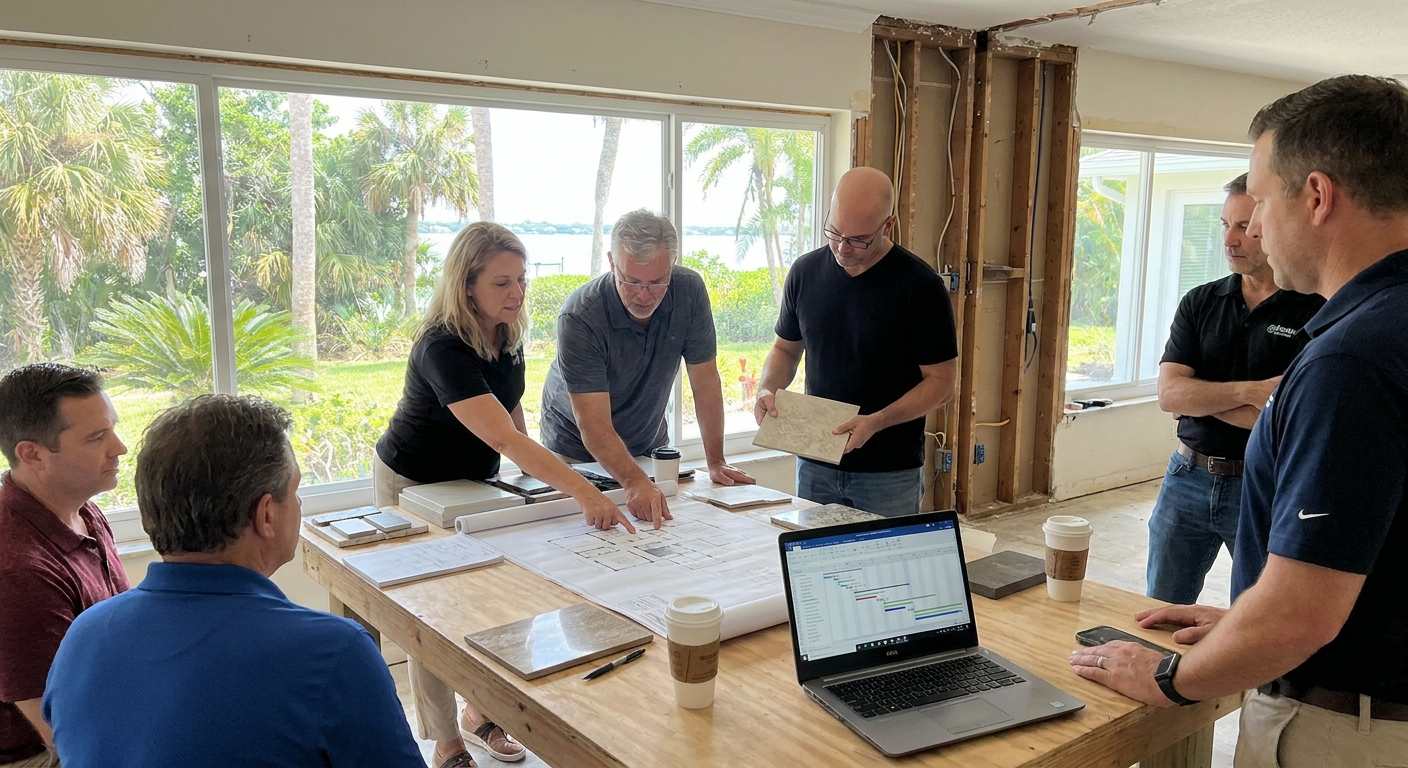
How Much Planning Goes Into a Whole-Home Renovation in Tampa?
October 1, 2026
-
-
-

Building Safer Commercial Spaces: A Practical Guide for New Owners
September 15, 2026
-
Do Older Homes in Tampa Need Structural Upgrades Before Remodeling?
September 3, 2026