.png)

By using our website, you agree to the use of cookies as described in our Cookie Policy
a
Rss Feed
Do You Need to Elevate Your Home in Largo for Flood Zones?
Most homeowners in Largo treat flood risk like a distant possibility. Something that happens to someone else's block. But FEMA doesn't care about your optimism — and neither does the Gulf when a storm pushes water inland. If your property sits in a high-risk zone, elevation isn't just a suggestion. It's often the difference between a livable home and a gut job after the next hurricane rolls through.
So here's what matters. If you're in a designated flood zone, you're playing by different rules. Insurance costs spike. Building codes get stricter. And if you're planning renovations or repairs that hit certain thresholds, you might be required to lift the entire structure whether you planned on it or not. Understanding where you stand — literally — is the first step to protecting what you've built.
Flood Zone Designations Aren't Guesswork
FEMA divides Largo and the rest of Pinellas County into zones based on flood probability. Some areas are low-risk, marked as Zone X. Others fall into high-risk categories like AE or VE, where flooding during major storms is not just possible but expected. These aren't static lines on a map — they get updated as weather patterns shift and infrastructure changes.
You can't assume your zone status based on what a neighbor told you five years ago. Maps change. Risk levels shift. Check your property's current designation through FEMA's online tools or by contacting Largo's building department directly. If you're in a high-risk zone and didn't know it, your insurance company probably does.
Lifting Your Structure Above the Flood Line
Elevating a home means raising it above the base flood elevation — the height floodwater is projected to reach during a major event. The BFE isn't a suggestion. It's the benchmark used by engineers, insurers, and code enforcement to determine whether your home meets modern flood standards.
The benefits go beyond dodging water damage. Elevated homes qualify for lower insurance premiums, sometimes cutting annual costs by thousands. They're easier to sell, especially as buyers become more aware of flood risk. And if you're making substantial improvements to your property, elevation might not be optional at all — it could be required by local code.
- Reduced flood damage risk during hurricanes and heavy rain events
- Lower flood insurance premiums for properties in high-risk zones
- Increased resale value and buyer confidence in flood-prone areas
- Compliance with updated building codes during major renovations
- Long-term protection against rising sea levels and storm surge
When Code Says You Have No Choice
Largo enforces elevation requirements tied to FEMA guidelines and Florida's building code. If you're constructing a new home in a Special Flood Hazard Area, elevation is mandatory. Same goes if you're making substantial improvements — defined as work that exceeds 50% of your home's market value. Repair costs after major flood damage also trigger these rules.
Even if you're not planning a full remodel, adding square footage or replacing critical systems can push you over the threshold. Once that happens, you're not just fixing what broke. You're lifting the entire house to meet current standards. It's a bigger project than most homeowners expect, and it's not negotiable.
- New construction in designated Special Flood Hazard Areas
- Renovations or additions exceeding 50% of the home's assessed value
- Rebuilding after substantial damage from flooding or storms
- Replacing major systems or structural components in high-risk zones
Three Ways to Raise a House
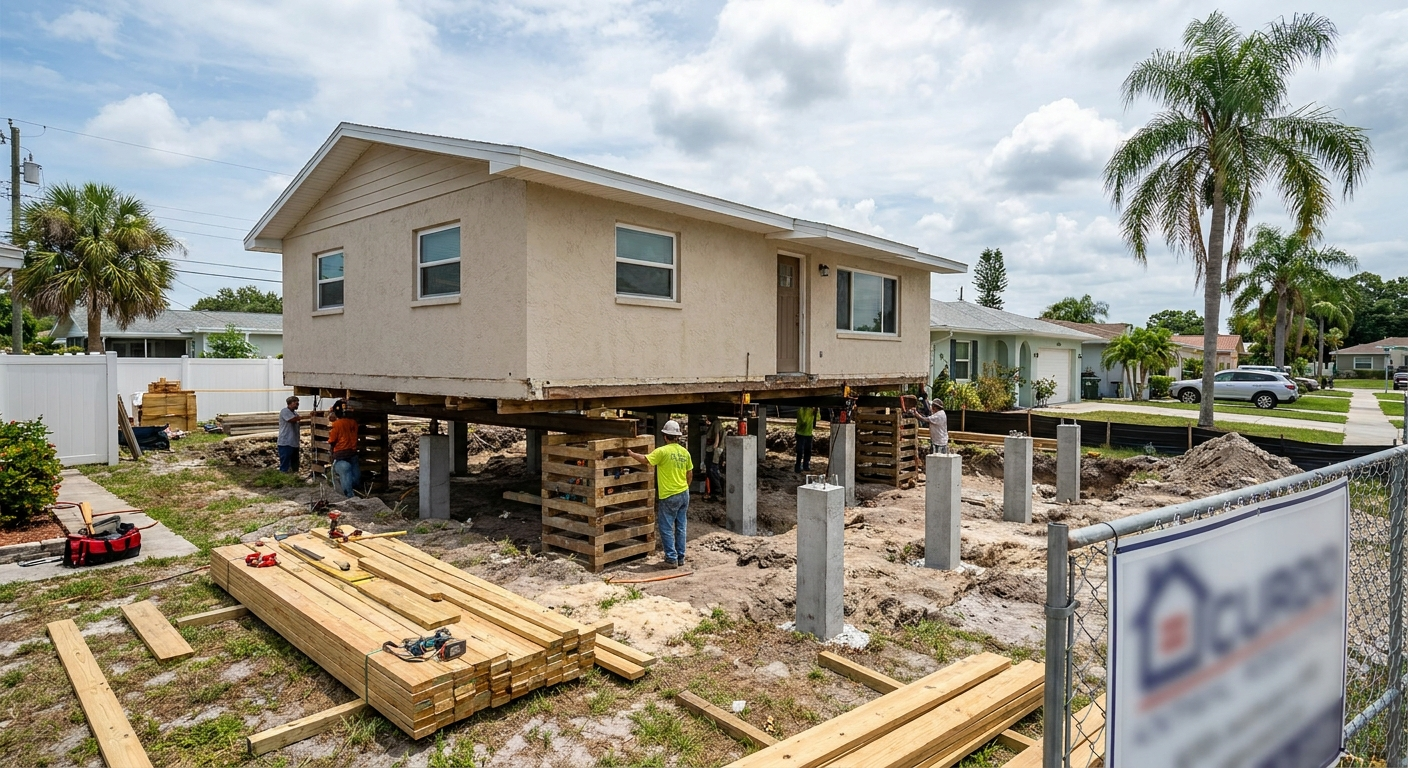
There's more than one way to get your home off the ground. The method depends on your home's construction, lot size, and what local regulations allow. Pier and beam systems lift the structure onto concrete columns, creating open space underneath. Extended foundation walls build upward from the existing base, raising the home in place. Fill methods involve adding dirt beneath the structure and constructing a new foundation at the higher elevation.
Each approach has trade-offs. Pier systems work well for wood-frame homes but require proper wind bracing in coastal areas. Extended walls suit masonry construction but add weight and cost. Fill works on larger lots but changes drainage patterns and landscaping. You'll need engineers and contractors who understand flood zone construction — this isn't standard residential work.
- Pier and beam elevation supported by concrete columns
- Extended foundation walls built upward from the existing base
- Fill methods that raise the ground level beneath the structure
- Hybrid systems combining multiple techniques for complex sites
Paying for Protection Without Going Broke
Elevation isn't cheap. Costs vary widely based on your home's size, construction type, and how high you need to go. But there's help if you know where to look. FEMA administers grant programs specifically for flood mitigation, including the Hazard Mitigation Grant Program and Flood Mitigation Assistance. Both can cover a significant portion of elevation costs for qualifying homeowners.
State and local programs sometimes kick in additional funding or tax incentives. The catch? These programs have eligibility requirements, application deadlines, and limited budgets. If you wait until after a disaster declaration, you're competing with everyone else who just flooded. Start the process early if elevation is in your future.
- FEMA Hazard Mitigation Grant Program for post-disaster projects
- Flood Mitigation Assistance for proactive elevation work
- State and local incentives for flood-resistant construction
- Potential insurance premium reductions that offset long-term costs
- Increased property value that improves return on investment
Don't Wait for the Next Storm to Decide
Elevation isn't just about meeting code or lowering insurance bills. It's about being able to stay in your home when the next big storm hits the Gulf Coast. Largo's flood zones aren't getting any safer, and the cost of waiting keeps climbing. If your property's in a high-risk area, you're already on borrowed time.
Get your zone designation confirmed. Talk to contractors who've lifted homes in your neighborhood. Run the numbers on insurance savings versus project costs. And if you're planning any major work on your property, factor in elevation requirements before you break ground. The rules are clear. The risk is real. And the decision is yours — until the next flood makes it for you.
Let’s Safeguard Your Largo Home Together
Protecting your home from flood risk is a decision we make not just for ourselves, but for our families and our future. If you’re ready to take the next step or have questions about elevating your home in Largo, let’s talk it through. Call us at 727-596-2390 or contact us today so we can help you secure your peace of mind before the next storm arrives.
‹ Back
Recent Posts
-
How Much Planning Goes Into a Whole-Home Renovation in Tampa?
October 1, 2026
-
-
-

Building Safer Commercial Spaces: A Practical Guide for New Owners
September 15, 2026
-
Do Older Homes in Tampa Need Structural Upgrades Before Remodeling?
September 3, 2026